Showing posts with label Grizzly Bears. Show all posts

Thursday, May 28, 2015

Polar bear paradise at Henry Vilas Zoo

The happy new residents of the brand new Arctic Passage, at Henry Vilas Zoo in Madison Wisconsin. Suka roams, while Sakari chews on one of the logs.


Suka and Sakari welcomed visitors to their brand new home, Arctic Passage, at Henry Vilas Zoo in Madison Wisconsin over the Memorial Day weekend. I visited on Monday, May 25.


A view of the old polar bear grotto, in a photo taken in June, 2013. The project broke ground in March of 2014. The new Arctic Passage is in the same area, but  at 1.7 acre, is much, much larger. Photo by Jeff Merrow.

A map of the $9.13 million Arctic Passage project.
 There is reference to an overlook to be added later, at top left. The area is home to polar bears, grizzly bears and three harbor seals.

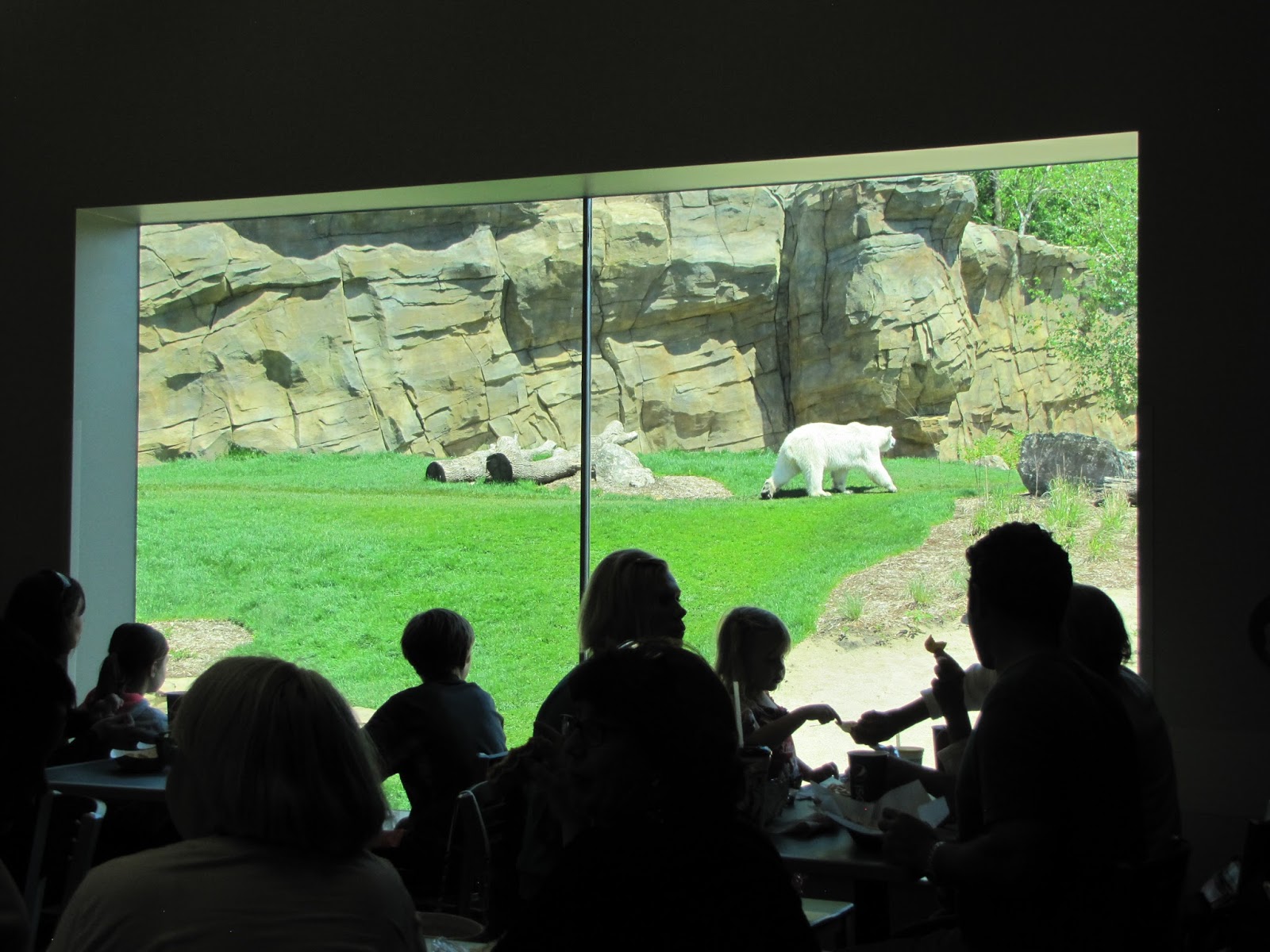
Suka walks, and Sakari thinks about chewing some more bark off that branch. The three windows you see are in the cafeteria,
 so you can watch the bears while you enjoy lunch.

Suka and Sakari, now 2 ½ years old, were born at the Toledo Zoo to Crystal and Marty on November 21, 2012. Last September, the twins moved to Como Zoo in St. Paul, Minnesota, where they had an enclosure all to themselves. The other two polar bears at Como, Neil and Buzz, lived next door.


Sakari swims in the big diving pool, While Suka takes one of her long walks. This photo was taken from the central viewing area between the two enclosures.
This past Saturday, May 23, was the grand opening of the new Arctic Passage at Henry Vilas, a wonderful little free zoo in Madison.

One comment I heard over and over was how much nicer this enclosure was for the bears than the ancient and much smaller grotto.

The polar bear cubs seemed to be having a wonderful time, enjoying the deep pool and the rolling grassy meadow they now call home.

Suka and her brother Sakari will live at Henry Vilas for several years, while they grow up. They are still just playful cubs.

One of the three panoramic windows in the cafeteria.

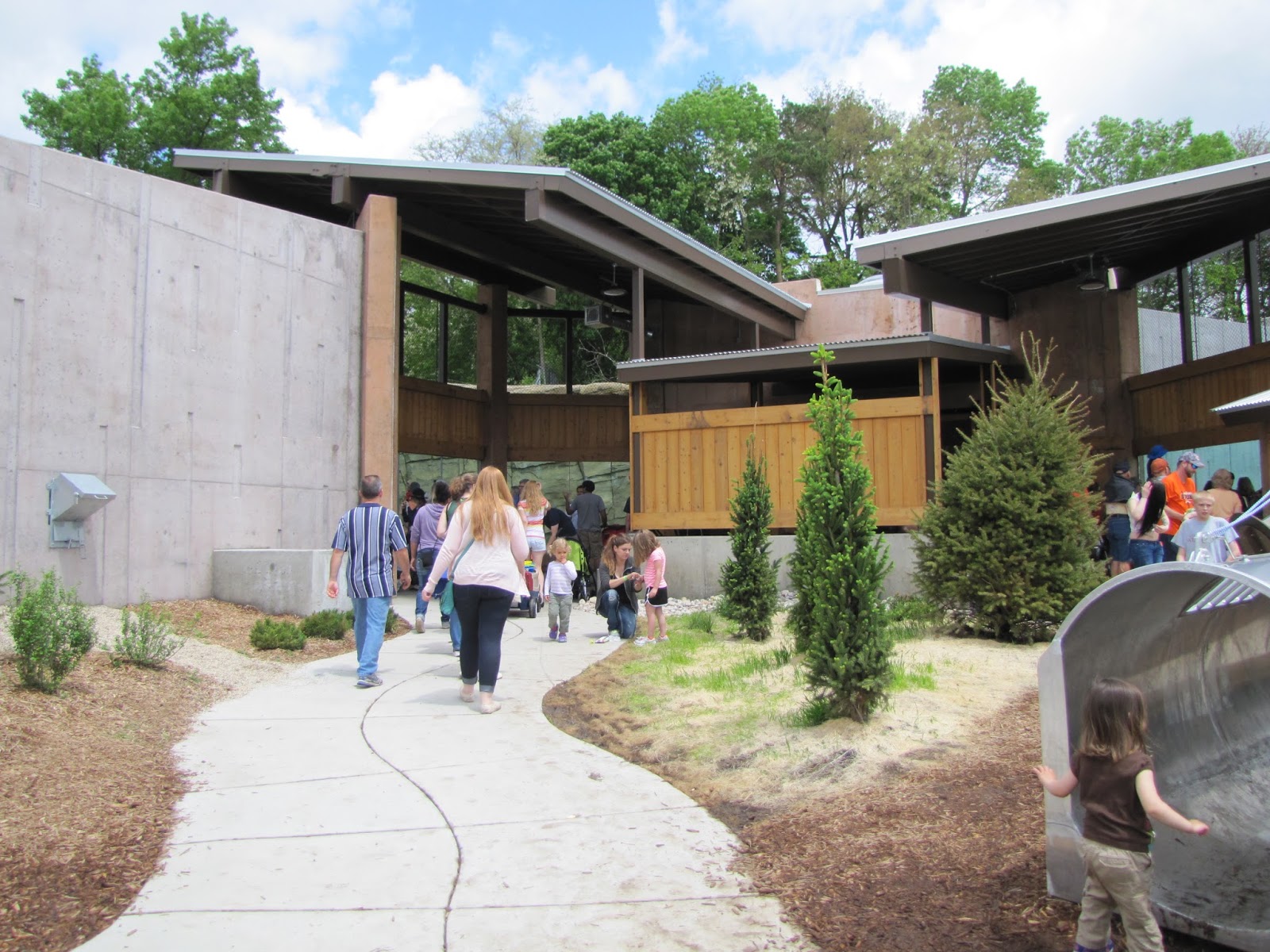
As you approach Arctic Passage, the first thing you see is the restaurant. Straight ahead through the doors are the three big windows to view the meadow from inside. To the right is another window to see the lower corner of the meadow. There is also a den with  two viewing windows to peek inside.

One of two windows to see the den

Walking toward the central viewing area, you can stop and see the underwater action in the 46,500 gallon pool from two levels, if anyone is swimming. Arctic Passage has many interactive educational features too, about the environment and endangered animals such as polar bears.

And here we have a swimmer, and fans to watch and take photos

Diving

The underwater viewing window,
as seen from the central viewing window.

Suka wonders who is that pretty bear in the water

Suka and Sakari in the lush grass.

Suka by the sunning rock in the big pool.

Sakari chomps some bark

Suka finds a snack

Sakari really loves rolling around on the grass.

Walking toward the central viewing area. There is a "problem bear relocation trap" that children can climb into, lower right. The polar bears are in the area to the left, the grizzlies to the right.

A view of the underwater viewing area, taken from the bridge by the bison

A training and demonstration area runs along the back wall between the two enclosures, so keepers can educate visitors about how they care for the bears.

A view of the right hand enclosure, through the central viewing window.The Grizzly Bear sisters Ash and Lexi seem to enjoy their new home.

A view of the right hand enclosure through the pool viewing window.
 That is the edge of the pool to the right.

A view from the lower window.
 3 year old sisters Ash and Lexi enjoy having so much space.

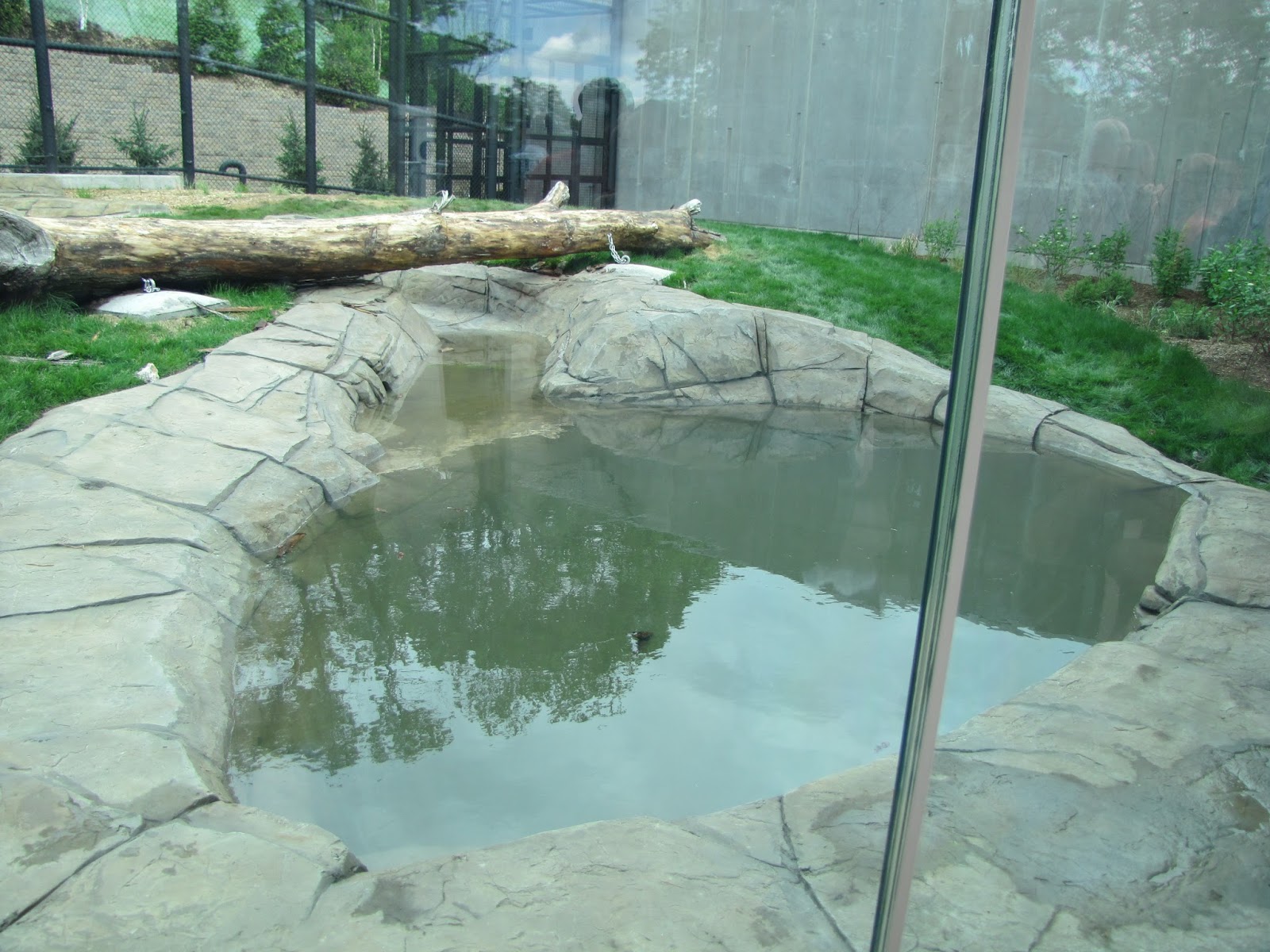
The pool in the right hand enclosure.
 The grizzlies have a running stream that sometimes has live fish to catch.

The Grizzly Sisters Ash and Lexi really enjoy their new home, and the visitors find them to be very entertaining.


Something I have not seen before, a retired research vehicle - a Tundra Buggy -  sponsored by Polar Bears International is on display at Arctic Passage.
 

Sakari and Suki wait by the door. They go inside at 4 p.m. So come early.

Monday, October 8, 2012

Qannik and friends win top AZA award!

Qannik

Another visit to the Louisville Zoo, and the delightful polar bear cub Qannik. Because of the rotation schedule, yet again I did not see the American Siku.

Ein weiterer Besuch der Louisville Zoo, und die reizvolle Eisbärbaby Qannik. Aufgrund der Drehung Zeitplan, noch einmal sah ich nicht die amerikanische Siku.

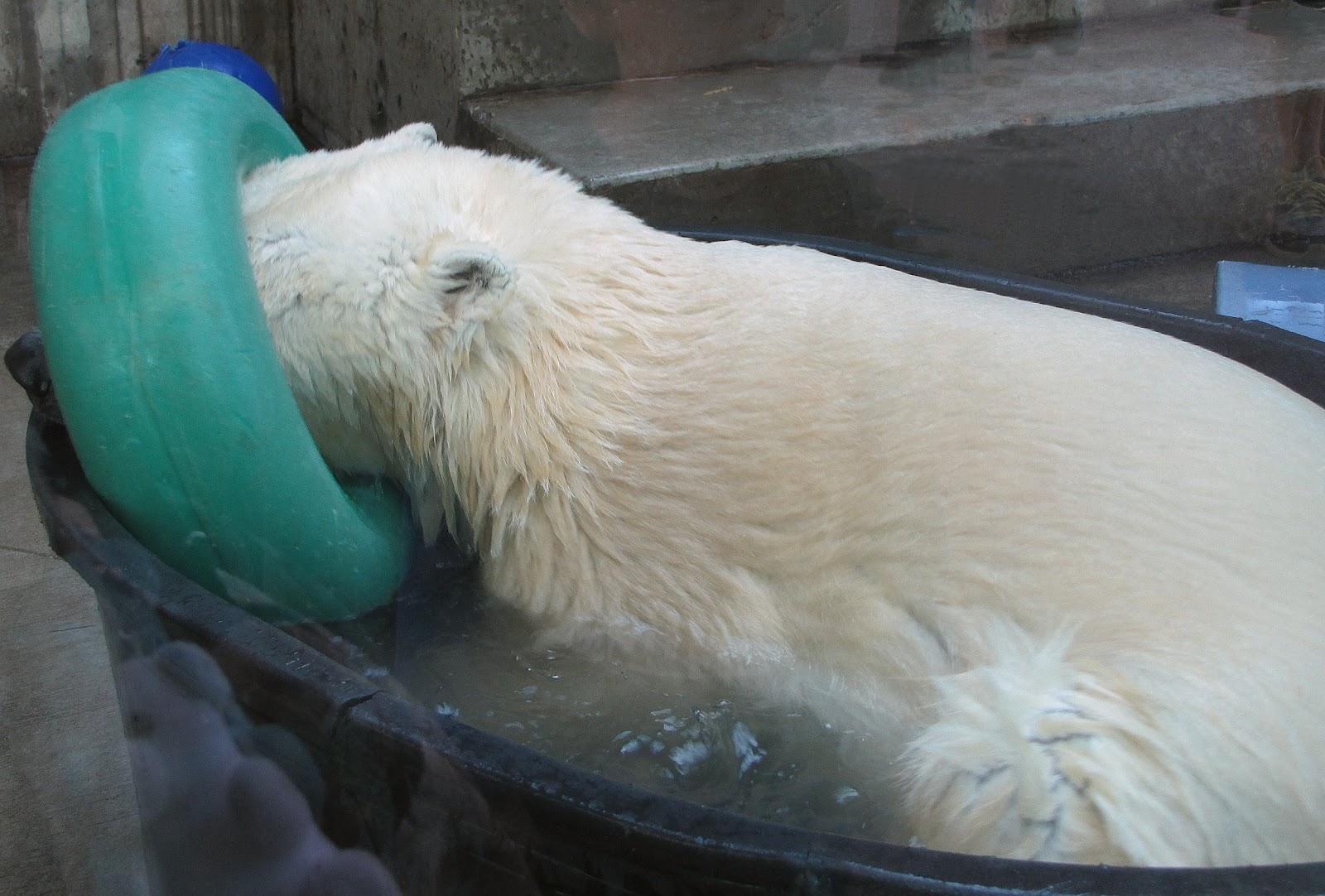
Qannik in her bucket of water


And now in a bucket of ice!


Qannik and her favorite toy - a yellow Crazy Egg


I did see the Grizzly Bear family. Because Mama Inga has decided that her cubs should be on their own, Inga is now in her own rotation, and almost fully grown cubs Otis and Rita are together by themselves.

Ich sah die Grizzly Bear Familie. Weil Mama Inga hat beschlossen, dass ihr Sohn und Tochter sollten sich auf ihre eigenen zu sein, ist Inga jetzt in ihrem eigenen Rotation, und fast ausgewachsen Bären Otis und Rita zusammen für sich.


Inga, the mamma Grizzly
I talked to head keeper Jane Anne, who said that Siku is doing very well. He is also very careful with his toys, and loves his new red crazy egg. Siku weighs 647 pounds at last report, and is fully in rotation, but not out every day, like Qannik is.

Ich sprach mit Tierpfleger Jane Anne, die, dass Siku geht es sehr gut. Er ist auch sehr vorsichtig mit seinen Spielsachen und liebt seine neue rot crazy Ei. Siku wiegt 647 £ am letzten Bericht und ist voll in Drehung, aber nicht jeden Tag, wie Qannik ist.

The new banner announces good news for Glacier Run

And there is some great news about Glacier Run. Qannik's home now proudly displays a banner announcing that Glacier Run has won the 2012 top honors for Exhibit Design from the Association of Zoos and Aquariums (AZA). The award was announced September 14, 2012.


Und es gibt ein paar tolle Neuigkeiten zu Glacier Run. Qannik Hause Jetzt zeigt stolz ein Banner der Ankündigung, dass Glacier Run hat die 2012 die höchste Auszeichnung für Exhibit Design von der Vereinigung der Zoos und Aquarien (AZA) gewonnen. Die Auszeichnung wurde angekündigt, 14. September.

The enclosure looks like a town suffering from the damages of a melting glacier,
 giving the bears a nice area to climb. This photo was taken before the Grizzly Bears were separated.

Glacier Run is modeled after Churchill, a town on the Hudson Bay in Canada, known for its population of polar bears. The Louisville Zoo's Glacier Run is home to seals, sea lions, a grizzly bear mother and her two cubs, and polar bears Qannik, Siku and Siku's grandmother Arki.

Glacier Run ist so konzipiert, wie Churchill, einer Stadt an der Hudson Bay in Kanada, für seine Bevölkerung von Eisbären bekannt aussehen. Die Louisville Zoo Glacier Run ist die Heimat von Robben, Seelöwen, ein Grizzlybär-Mutter und ihre zwei Jungen, und Eisbären Qannik, Siku und Siku Großmutter Arki.


Near the enclosure is a toy UPS truck, to remind everyone that UPS helped save Qannik

Qannik, as everyone knows, made international news when she was rescued from the wilds of Alaska after being somehow separated from her mother and sister in the early spring of 2011. She only weighed 15 pounds when she was brought to the Alaska Zoo to recover. In late June, Qannik was flown courtesy of UPS and their “Operation Snowflake,” to the Louisville Zoo.

Qannik, wie jeder weiĂź, machte international Schlagzeilen, als sie aus der Wildnis von Alaska wurde, nachdem er irgendwie von ihrer Mutter und Schwester im FrĂĽhjahr des Jahres 2011 getrennt gerettet. Sie wog nur 15 £, wenn sie zu der Alaska Zoo gebracht wurde zu erholen. Ende Juni wurde Qannik mit freundlicher Genehmigung von UPS und ihre "Operation Snowflake", der Louisville Zoo geflogen.
Qannik enjoys the big pool at Glacier Run
According the Louisville Zoo's press release, “This award is the highest honor for new exhibits, and the Louisville Zoo is on the leading edge of zoological exhibits in North America,” said AZA president and CEO Jim Maddy. “This exhibit demonstrates the Louisville Zoo’s innovation and dedication to the best in animal care and public education.”

Nach der Louisville Zoo in der Pressemitteilung, "Diese Auszeichnung die höchste Auszeichnung für neue Exponate ist, und das Louisville Zoo ist auf der Vorderkante des zoologischen Exponaten in Nordamerika", sagte AZA President und CEO Jim Maddy. "Diese Ausstellung zeigt die Louisville Zoo Innovation und Engagement zu den besten in Tierhaltung und Aufklärung der Öffentlichkeit."

“Glacier Run has exceeded our expectations, and our guests and visiting professionals are always surprised at the immersive experience of Glacier Run,” said John Walczak, Louisville Zoo Director. “We are proud to offer extraordinary spaces and enrichment opportunities for our animals as well as a place where visitors can have fun and learn about the arctic and some of the most important environmental stories of our generation.”

Glacier Run hat unsere Erwartungen übertroffen, und unsere Gäste und Fachbesucher sind immer auf der immersive Erfahrung Glacier Run überrascht", sagte John Walczak, Louisville Zoo Director. "Wir sind stolz darauf, außergewöhnliche Räume und Bereicherung Chancen für unsere Tiere sowie einen Ort, wo die Besucher Spaß haben und erfahren Sie mehr über die Arktis und einige der wichtigsten Umwelt-Geschichten von unserer Generation zu bieten."
Arki, and one of the ramps she gets to climb every day
Glacier Run was one of eight entries for the Exhibit Award. Here, the habitat gives the bears and the zoo visitors plenty of variety. It has two exhibits, seven bedrooms, bridge transfer and under town tunnel, and the keepers are constantly striving to keep the bears active and engaged with innovative enrichment activities which mimics the activities of wild bears. The ramps and stairways give the bears the right kind of exercise, which has especially helped Grandma Arki in strengthening her back legs.

Glacier Run war einer von acht Einträge für den Exhibit Award. Hier gibt der Lebensraum der Bären und die Zoobesucher viel Abwechslung. Es verfügt über zwei Exponate, sieben Schlafzimmer, Brücke Übertragung und unter Stadt-Tunnel, und die Tierpfleger sind ständig bemüht, um die Bären aktiv und engagiert mit innovativen Aktivitäten zur Anreicherung, die die Aktivitäten von wilden Bären nachahmt. Die Rampen und Treppen geben die Bären die richtige Art von Übung, die vor allem Oma Arki hat bei der Stärkung der Rücken Beine geholfen.
One of the educational posters around Glacier Run

Glacier Run usually has staff and volunteers to answer questions and interact with the visitors. Polar bear videos are also presented on flat screens tv (include a nice video about how Qannik was rescued), and informative posters about the individual bears and their history. Displays throughout the zoo give recycling information and encouragement to reduce our carbon footprint, as well.
Glacier Run hat in der Regel Mitarbeiter und Freiwilligen, Fragen zu beantworten und die Interaktion mit den Besuchern. Eisbär gibt es auch Videos auf Flachbildschirmen tv (gehört ein schönes Video über Qannik gerettet wurde), und informativen Plakaten über die einzelnen Bären und ihrer Geschichte vorgestellt. Displays über den Zoo geben Recycling-Informationen und Ermutigung, um unseren Kohlenstoff-Fußabdruck zu reduzieren, wie gut.

Sunday, March 4, 2012

Neil, Buzz and the Minot Bears

Buzz enjoys a snack from his puzzle feeder 


Neil works on his puzzle feeder as part of the zoo's enrichment - Buzz is in the background, having his own snack.


Buzz and Neil, 16 year old brothers at the Como Zoo in St. Paul, Minnesota, have spent most of the past year playing host to three flood refugees from the Roosevelt Park Zoo in Minot, North Dakota, Goldie the Grizzly Bear (a male), and Brown Bears Judy and Sandy (lady bears) are enjoying the run of the right-hand half the brand new polar bear habitat at the Como Zoo, until they can return home to Minot, hopefully in the next few months. A much improved new bear habitat is being built in Minot, but the perimeter fencing at the Roosevelt Park Zoo must be solid and safe before the brown bears can return.
Goldie the Grizzly Bear, and one of the Brown Bears

The Roosevelt Park Zoo was under 4 feet of water for several months last spring, due to heavy rains and snow melt. Since the waters receded in July, the zoo has been working to rebuild for the 2012 season. Minot, North Dakota, about 500 miles away from St. Paul, Minnesota.

The Como Zoo also offered a temporary home to some poison dart tree frogs, still at Como, and 13 endangered African penguins, who have since moved to a new penguin habitat at the nearby Minnesota Zoo.

Some of the affected Minot hoofed animals, such as llamas and bison, were taken in by local farmers in the Minot area. Other animals moved into a roomy old furniture warehouse that was quickly retrofitted as an indoor zoo, still in use. Still other animals were sent to zoos around the country. The Tanganyika (Tan-GAHN-yee-cuh) Wildlife Park is hosting three giraffes, two lions, two tigers and two Amur leopards from the Roosevelt Park Zoo.

Neil and Buzz were themselves houseguests for two years in the fabulous polar bear habitat at the Detroit Zoo, while their new home at Como was under construction. Polar Bear Odyssey at the Como Zoo opened June 3, 2010. The brothers enjoyed the run of the place for a year, and then Goldie, Sandy and Judy arrived in June of 2011.

Goldie the Grizzly Bear from Minot
The three Minot bears were quarantined for a month before they came out in public, to make sure they weren't bringing in any diseases or parasites for the other bears. For most of the past year, the central training area connecting the two bear yards was closed off, but Neil and Buzz could see their visitors from the bedrooms in the living area. A few weeks ago, the polar bears were allowed back into the training area, and Buzz spent a good deal of time when I was there, pawing at the locked door, curious about the new neighbors, or as he probably calls them, the invaders.

The brown bears are living in the right hand habitat, which has the deepest pool, good for fishing, but they mostly stay out of the water. That side has been the one preferred by Neil and Buzz, until it was taken over by the visitors. Zookeeper Cindy said that Neil and Buzz will be very happy to get their favorite area back. Since they have gotten used to the left hand area, it will be interesting to see which side they prefer now.
Even though it is winter, the brown bears aren't really hibernating. They have a good food supply, so they stay active through the winter.
One of the Brown Bears, Judy or Sandy, and Goldie the Grizzly


Cuddly Brown Bear - Judy or Sandy

Brown Bear
Goldie takes a drink


I visited the Como Zoo on February 25, two days before International Polar Bear Day, and Zoo keeper Julie Yarrington talked about her trip to Churchill, Manitoba Canada, under the auspices of Polar Bears International and the American Association of Zoo Keepers, for a week long leadership camp. She said that polar bears in the wild are very different from zoo bears in the way they act, and their attitude, and she learned a lot from her trip to the Hudson Bay area.


Polar Bears International worked with the Como Zoo in the design of Polar Bear Odyssey, which mimics the ecosystem of the Hudson Bay. The exhibit has many educational aspects, as well as daily zoo keeper talks. Here, Justin holds a ceramic bear showing the size (one pound) of a newborn polar bear.


Neil spent most of the afternoon in the dry moat, chasing around some big white barrels, but was finally lured out by the promise of some yummy food, stuffed in a puzzle box.
Neil - see the spots?
Neil has rubbed a couple of spots of fur off his behind.


Buzz wants to break down this door to get to the visiting bears.
Buzz 


Neil and Buzz - and some fun food

End of the day and Neil takes a nap in his bedroom