Thursday, January 26, 2012

The Three Bears of the Cincinnati Zoo

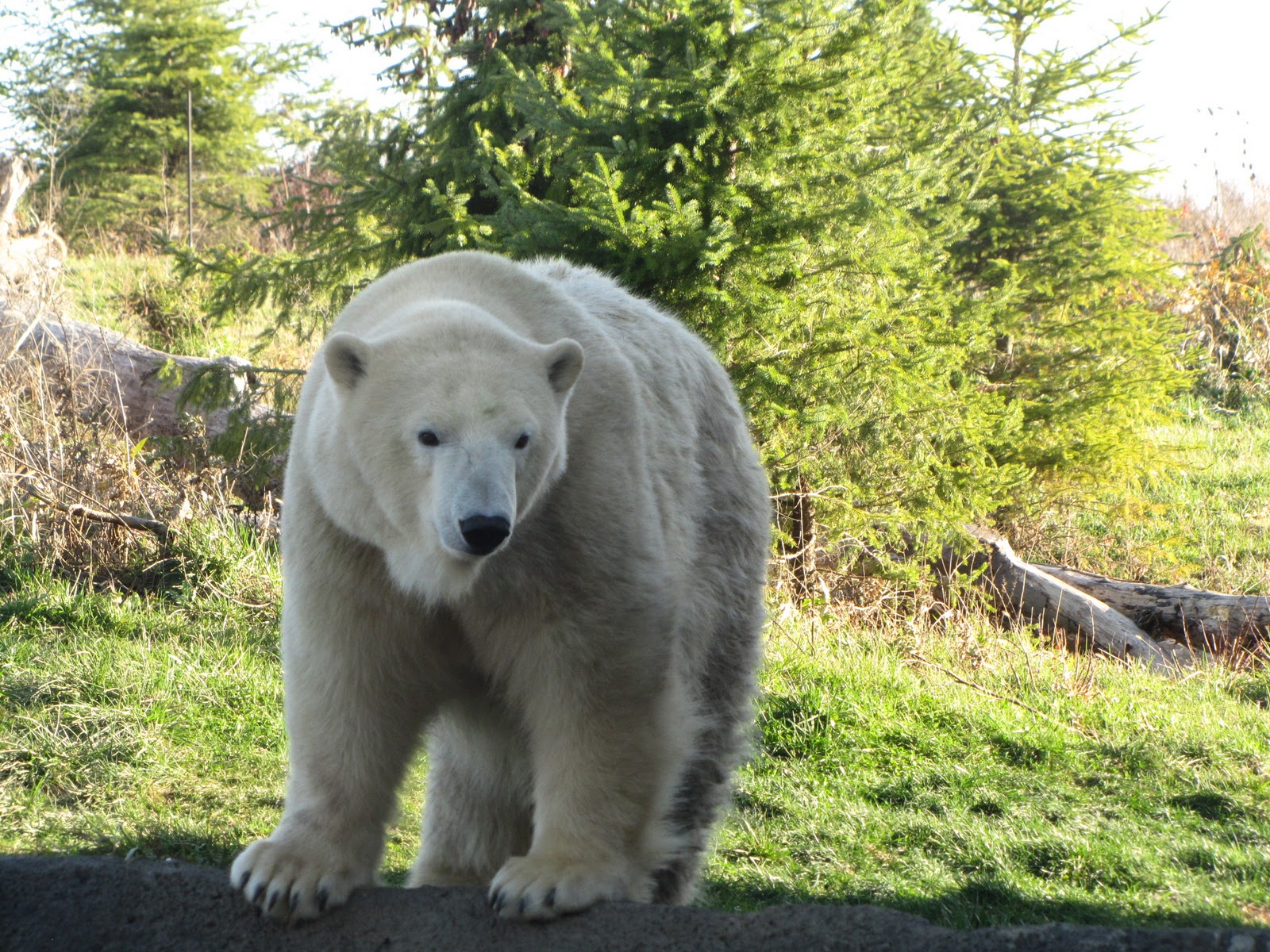
Rizzo meets some young zoo visitors


Berit, on the left, and Rizzo, on the right

Rizzo watches Berit swim

Berit shakes, then swims some more


The Cincinnati Zoo and Botanical Garden is currently home to two lady bears named Rizzo and Berit, and their gentleman friend Little One, or as he is sometimes called, Lil One. The have a roomy enclosure with waterfalls and swimming areas, and good visibility for the visitors.
Rizzo

14-year-old Rizzo has been in Cincinnati the longest. She was born at the Buffalo Zoological Gardens on December 10, 1997, and came to the Cincinnati Zoo in October of 1998, as a cub almost a year old. Her mother was Becky, and her father was Herman Jr., She is to be returning to Buffalo soon, for breeding purposes. There is a male there who was rescued from the wild as a cub, and his genes would be important to pass on.
Berit

13-year-old Berit was born on December 28, 1998 in the Denver Zoological Gardens, along with her twin brother Ulaq. The twins came to the Cincinnati Zoo in June of 2000. There had been a naming contest in Denver for these bear cubs, and Berit was named after the granddaughter of the winner of the contest, who was also a major supporter of the zoo. There was a bit of a controversy when the twins came to Cincinnati and another naming contest was announced. The person in Denver who had already won and paid for the naming rights protested loudly. Even though the cubs were renamed Imaq and Sedna in Cincinnati due to the new contest, the new names did not stick for some reason, and the bears continued to be called by their original names.

The keepers were devastated when Ulaq unexpectedly died April 8, 2004 of Kidney failure, strange for a bear of that young age. The polar bear enclosure was closed for a time, while the officials determined the cause of death.

Back in 2000, about the time Berit and Ulaq came to Cincinnati, back in Denver, their mother Ulu had been diagnosed with a spinal lesion, and died. Ulu was also the mother of the ultra-famous twins Klondike and Snow, born in 1994. She rejected the babies and the zoo staff famously raised them. They now live in Sea World in Orlando, Florida.
Little One

Little One was born at the Cleveland Metro Parks Zoo on December 13, 1989, which makes him 22 years old. He has a slight limp in his left leg, due to an injury as a youngster. He left his mother Snowball and Sister Aurora to come to the Cincinnati Zoo in January of 2007. There were hopes that he would breed with the two females here, but so far, no cubs.

Rizzo and Little One play-fight over a toy


Which bear is which?

It isn't hard to tell the three bears apart, once you get to know them.

Little One is the big husky male with a broad face.


Rizzo


Rizzo is like a round, fluffy snowball, with a roundish head.
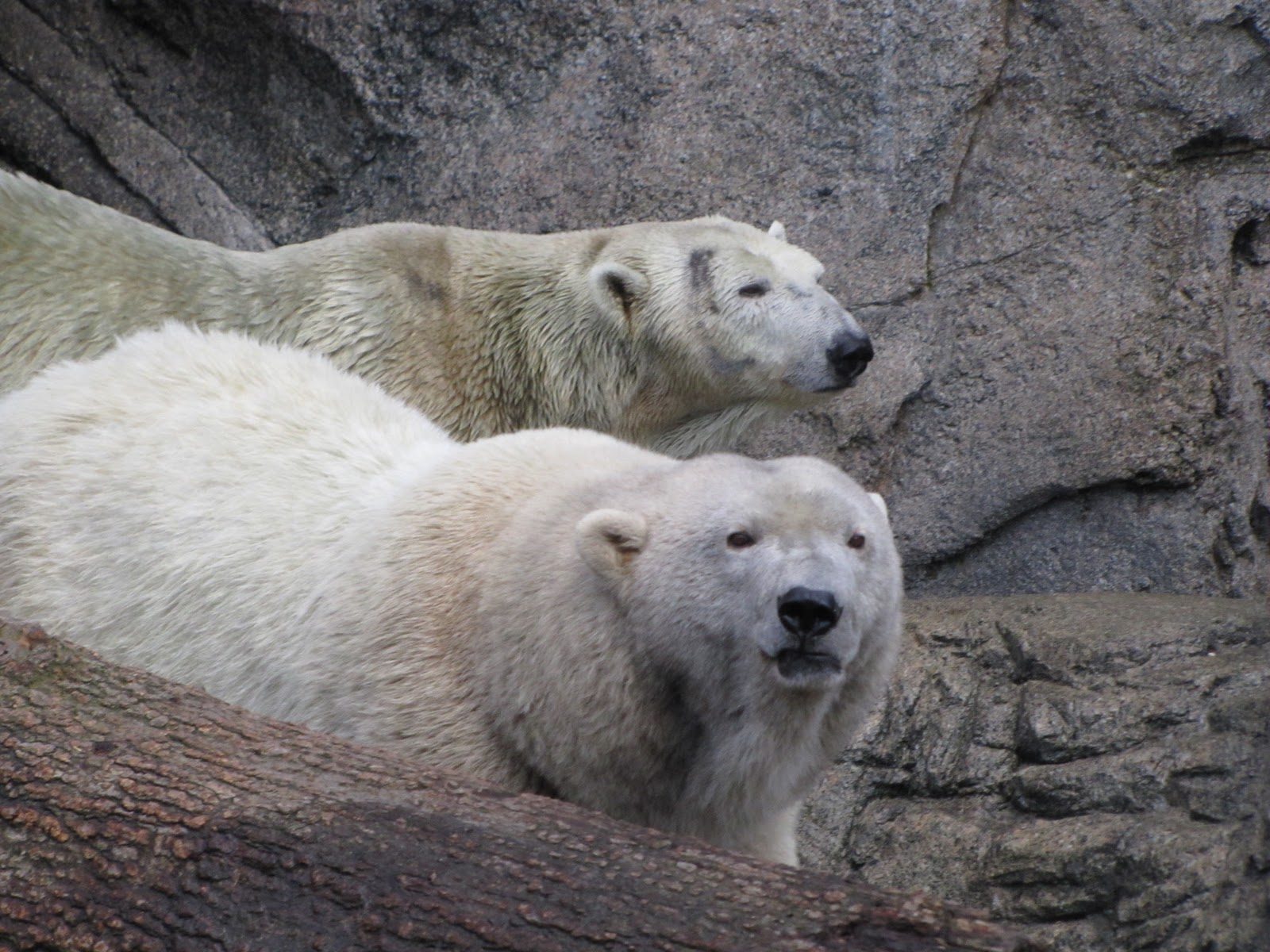

 Berit, here behind Rizzo, is built like torpedo, long and lean, with a narrower head. Berit and Rizzo like to cuddle up together. They have been together a long time.
The girls take a nap


Sunday, January 8, 2012

Meeting up with Thane Maynard at the Cincinnati Zoo

There was time for one last polar bear visit in 2011.

Rizzo
In the days between Christmas and New Years, we ventured to the wonderful Cincinnati Zoo and Botanical Garden to visit 22 year old Li'l One, 14 year old Rizzo and 13 year old Berit during the PNC Festival of Lights. This is a magical time to visit the Cincinnati Zoo. There are colored lights everywhere, and tunnels of twinkling lights between various areas. A black-light puppet show, a 4-D Polar Express movie, and a festive train ride make it a great family experience. But I was here to see the bears. Little did I suspect, I would meet someone else!
Berit swimming her laps

Mid-Afternoon, and Berit was heading for the pool area to do her laps. Li'l One and Rizzo were napping. As I was gazing at Berit in the magnificent pool observation area, I heard a familiar voice. It was Cincinnati Zoo Director and well-known animal expert Thane Maynard. I recognized his voice from “The 90 Second Naturalist” on the radio, and his many TV appearances. What an opportunity! I introduced myself, and we had a most wonderful conversation about the polar bears.
Me with Thane Maynard, Director of the Cincinnati Zoo. Berit is swimming in the background

He told me that there are plans for Rizzo to move from the Cincinnati Zoo to the Buffalo Zoo for breeding opportunities. She has been here for a good number years with Li'l One with still no cubs. There is a hopeful breeding male, 21 year old Nanuq in Buffalo. He was rescued in Alaska as a wild cub in 1987 and grew up in the Henry Villas Zoo in Madison Wisconsin. Since Nanuq was born in the wild, it is important to pass his genes on into the zoo population if possible. The Buffalo Zoo is also where Rizzo was born, so she will be going home, so to speak. There is currently another female at the Buffalo Zoo, 10 year old Anana.

Berit and Li'l One will remain at the Cincinnati Zoo.

Rizzo

Rizzo defers to Li'l One

Thane also reminded me of the CREW polar bear breeding program project centered at the Cincinnati Zoo, whereby “poop” samples from female polar bears in zoos all over the country are sent to Cincinnati every week during pertinent times to test for pregnancy hormones using cutting edge technology. In this way, zoos can have a head's up on whether a certain bear might be pregnant. Previously, zoos just had to go on behavior and den up the females in the fall on the chance they might be pregnant.

He said that zoos made a terrible mistake in breeding polar bears in the 70s and 80s, in giving contraceptives to the female bears, in that they didn't become fertile when they went off the contraceptives. Now zoos have learned from that mistake. Polar bears are notoriously difficult to breed, in the wild and in captivity, and it is difficult to keep the cubs alive, but a lot of progress is being made.

Thane remarked how he is personally aware of how the climate in changing. On the day we talked, he said that he was planning to go running later that day, and here it was, late December. However, he said, we won't completely lose wild polar bears. Some bears will remain in the very northern areas, and other are already breeding with other bears, and there will be more hybrids. But today's polar bears are facing a very difficult future, since they need the sea ice to hunt seals, and the sea ice is so late in forming, especially this year.

I told him how I had been allowed to feed some figs to Augo, a 6 month old baby polar bear in Denmark this past May. He reminded me of the 1990 incident in the Cincinnati Zoo in which one of the zookeepers lost a hand to an adult polar bear by reaching into a cage at the wrong time. These are incredibly strong and unpredictable animals.
Rizzo and Li'l One - Don't
fight over your toys, kids.

Rizzo


Berit (in back) and Rizzo

Cincinnati Zoo's Lords of the Arctic exhibit opened in the summer of 2000. It has a 12 foot deep 70,000 gallon pool with a spectacular underwater viewing area. There are pools, waterfalls, and trails wandering through the separated areas of the compound. I will save stories and more pictures about my Christmas visit with Li'l One, Rizzo and Berit for a future blog. Stay tuned.

Monday, November 28, 2011

A Golden Afternoon at the Columbus Zoo 

 Just a week before their fifth birthday, Aurora and Anana welcomed me for another visit to their beautiful home at the Columbus Zoo, as the zoo made preparations for their first night of Wild Lights, their Christmas lights celebration. It was a crisp autumn day, and the sunlight, low in the sky, gave a magical luminescence to their fur. The bears, seeming to know that a big crowd was coming to see them that evening, spent most of their time lazing in the golden sunlight, resting up.


The fact that polar bears' fur is made up of clear hollow hairs may enhance the glowing effect of the setting sun.


Aurora and her sister share their enclosure with rustic fishing boats.


Too sleepy to try to catch a fish.

 Aurora and Anana were born on November 25, 2006, in the Toledo Zoo. Their parents are Crystal and Marty, and they have a two year old brother, Siku, who just moved to the Louisville Zoo, where Marty's mother Arki now lives. Also at the Louisville Zoo is the little girl cub Qannik, who was rescued from the Alaskan oil fields.

Jack Hanna and friends promoting the zoo's Wild Lights.


Aurora


Sunday, October 16, 2011

Top Honors for Polar Frontier at the Columbus Zoo!


Lucky Aurora and Anana! These twin sisters live in one of the best polar bear zoo habitats in the world. Here they swim in freshwater and salt-water pools, catch live trout, sunbathe on strategically placed rocks, play balance beam on mighty fallen trees, and enjoy their toys.
At the recent conference of the AZA, Association of Zoos and Aquariums in Atlanta Georgia, the Columbus Zoo received top honors for its $20 Million Northern Climate bear habitat, Polar Frontier, which opened in May of 2010. The award was given for the zoos strong message on climate change and an emphasis on animal enrichment.


Polar Frontier represents a deserted mining town in the Far North. The exhibit presents a story tableau about the fragile and changing arctic environment, with wonderful and spacious areas in which sisters Aurora and Anana can play. It also has a place for brown bears and arctic foxes.
Aurora and Anana were born at the Toledo Zoo on November 25, 2006, the daughters of Crystal and Marty. They moved to the Pittsburgh Zoo and PPG Aquarium in December of 2008 while they waited for their new home in Columbus to be built. Their mother gave birth to their little brother Siku in the Toledo Zoo on December 3, 2009. Siku, the only polar bear born in a USA zoo that year, has just moved to the Louisville Zoo.


 The bears love to climb over and under their fallen timber wonderland.

Anana looks for fish to catch above the observation area downstairs.

Wanna play? The upstairs observation deck allows visitors to see the bears up close.

Aurora

Aurora and Anana's home includes a 1.32-acre yard with two pools, smell ports (Anana really likes these), dig pits and shelters. A 167,000-gallon pool allows visitors to view the bears from above, at eye-level, and below when you go down the stairs. The other pool is a surge pool with a tidal effect, providing enrichment with various depths and moving water.
Anana catches a fish


The enclosure echoes the look of Greenland, with old boat ruins, chunky rock formations, and an old fishing hut. The bears really enjoy the timber playground, where they climb and balance like ballerinas.
Aurora likes to stay on shore a little more, and Anana likes to swim.

Aurora shelters in the Greenland cave during a rainstorm.


Visitors to the Columbus Zoo are lucky too, with the opportunity to watch these polar bear girls as they swim and play in their award-winning home.